Small Fly Control in Michigan
Fruit flies, drain flies, and phorid flies in homes and businesses. We treat the places small flies breed, and for businesses we also clean drains. Local and family owned since 2013.
 Local, family owned, since 2013
 Serving most of lower Michigan
 Free evaluations for businesses, no obligation
 Drains cleaned and treated for businesses
Flies we handle
Different small flies breed in different places, so treatment depends on the type of fly.
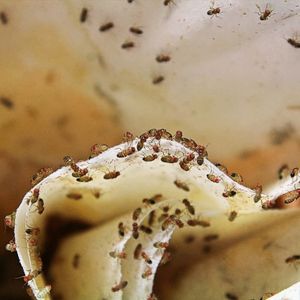
Fruit flies (vinegar flies)
Around produce, drains, bars, and beverage equipment.
More about fruit flies
Fruit flies are about 1/8 inch, often with red eyes. Two common types are the red-eyed fruit fly (smaller, tan or light brown with red eyes) and the dark-eyed fruit fly (larger, dark brown with dark eyes). Red-eyed fruit flies commonly breed in rotting fruits and vegetables. Dark-eyed fruit flies breed and feed on decaying organic matter in wet, hidden, or hard-to-reach areas such as drains.
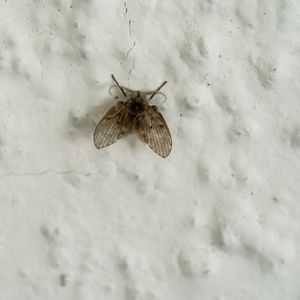
Drain flies
Also called drain moth flies, sewer flies, or filter flies.
More about drain flies
Adults are about 1/16 to 3/16 inch long and light gray to black, with heart-shaped wings. Drain flies are fuzzy and look like tiny moths that rest on walls near drains. They usually fly short distances, then crawl on surfaces. They breed indoors and outdoors in the slimy film found in drains, filters, sewers, lift stations, pits, and sump pumps.
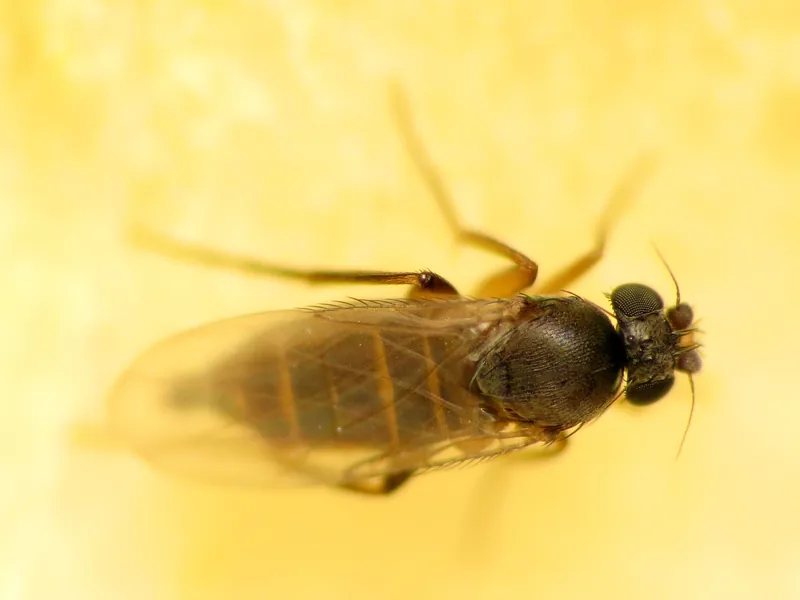
Phorid flies
Small flies that can point to plumbing problems.
More about phorid flies
Adults are about 1/16 to 1/8 inch long and black, brown, or yellowish, with a humped back. Phorid flies tend to run across surfaces in quick, jerky bursts. Phorid flies breed in moist, decaying organic matter and in sewage, and can become a problem when underground pipes break. Control can be limited until the pipes are repaired and the contaminated soil around the damaged area is removed.
For businesses
For restaurants, bars, food service, and other businesses, our small fly program includes:
- Small fly control is an add-on program, separate from our standard commercial service. We come out twice a month to help break the small fly breeding cycle.
- We look for the breeding sites.
- We work with your employees to improve sanitation practices and reduce breeding sources.
- We use integrated pest management (IPM) methods to control small flies.
- Installation and maintenance options for fly lights (insect light traps).
- A free evaluation with no obligation.
- An initial service, then maintenance visits. Fly program visits are every 2 weeks. If you already have monthly commercial service with us, we do the fly program during your regular visit and add one visit in between, which helps lower the cost of your small fly program.
Our between-visit return service doesn’t cover small flies.
For homes
Small flies at home start with a single-visit professional insect treatment. No inspection is needed before a residential treatment.
Small fly treatments aren’t covered by our 2-month return visit, because long-term results depend on sanitation practices. Our technicians will work with you to identify the sources.
See residential plans →What we do
We use these services as needed, depending on the flies and where they breed.
Drain cleaning & bio-sanitation
For businesses, we clean drains and floor gutters to remove the buildup small flies breed in, then apply a bio-sanitation foam to help reduce new buildup.
Drain treatment
We treat drains with a registered foam that contains an insect growth regulator (IGR), applied according to the label.
Crack & crevice treatment
We apply a foam treatment to the places small flies hide, such as missing grout, cracked tiles, pipe penetrations, and voids.
Fly lights & traps
Fly lights are available and quoted separately. We also set fruit fly traps and give you sanitation and structural recommendations to help keep flies from breeding.
What you can do to help
Many of these are one-time fixes, and the rest fit into a nightly close. Results depend on sanitation by you or your staff.
Outside
- Keep tight-fitting lids on garbage containers and keep spills to a minimum.
- When possible, keep garbage containers away from the building.
- Remove standing water near the building.
- Clear weeds, tall grass, and extra vegetation around the building.
- Declutter and remove items from the ground near the building.
- Install 20-mesh screens on open windows.
Entry points
- Seal doors, and inspect and repair entryways routinely.
- In high-traffic areas, consider double-door vestibules, an air curtain, or plastic strip curtains.
- Keep doors and windows open as little as possible.
- Inspect incoming goods and refuse items showing small fly activity or spoilage.
Inside
- Remove standing water and built-up moisture.
- Throw out infested fruits or vegetables and clean the area to remove food residue.
- Set regular cleaning routines, including deep cleaning under equipment and counters.
- Clean up food spills.
- Store perishables in sealed plastic containers, and refrigerate produce when possible.
- Cover liquor bottle spouts, and put away condiments.
- Wipe everything down nightly.
- Rinse empty bottles and cans, and take them out daily.
- Wash trash bins and clean floor mats.
- Wash soda machine nozzles nightly.
- Clean rags and mop heads daily before storage.
- Replace broken floor tiles, repair missing grout, and repair low spots in the floor where water pools.
- Seal cracks and crevices in damp areas.
- Use a fan or blower to dry floors.
Drains
- Clean drains, drain catches, and floor gutters regularly so debris doesn’t build up around openings.
- Clean drains and traps weekly with a drain cleaner made for that use, following its label, and a long-handled stiff brush.
- Use a drain snake to clear gel-like buildup in clogged drains.
- Make sure drain covers can be removed easily for cleaning.
- Fix plumbing and drainage problems promptly.
Fly lights
- Install fly lights (insect light traps) and keep them maintained.
- UV bulbs weaken over time and should be replaced regularly.
- Replace glue boards as needed; a dirty glue board catches fewer flies.
- Mount fly lights at eye level, away from competing light such as windows.
Small fly FAQ
Why do small flies keep coming back?
Small flies breed in wet, decaying material such as rotting produce, drain buildup, floor mats, and gaps under cracked tiles or missing grout. If those breeding sites stay in place, new flies keep developing. That’s why we treat breeding sites and give sanitation recommendations, and why results also depend on day-to-day cleaning by you or your staff.
What are drain flies?
Drain flies, also called drain moth flies, sewer flies, or filter flies, are small, fuzzy, gray to black flies with heart-shaped wings. They breed in the slimy film inside drains, filters, sewers, and sump pumps. We treat drains as needed, and for businesses we also clean them.
Why do phorid flies sometimes need a plumber?
Phorid flies can breed in sewage, often after underground pipes break. Our control can be limited until the pipes are repaired and the contaminated soil around the damaged area is removed.
How often do you service businesses?
Our small fly program for businesses starts with an initial service, followed by maintenance visits. Fly program visits are every 2 weeks. If you already have monthly commercial service with us, we do the fly program during your regular visit and add one visit in between, which helps lower the cost of your small fly program.
How much does small fly treatment cost for my home?
For homes, a single-visit professional insect treatment is $169. No inspection is needed before a residential treatment. Small fly treatments aren’t covered by our 2-month return visit, because long-term results depend on sanitation practices. Our technicians will work with you to identify the sources. See our residential plans.
Do businesses pay for an evaluation?
No. Evaluations are free with no obligation. Fly lights may be extra and are quoted separately.
What areas do you serve?
We are a family-owned company based in Davison, MI, and we serve communities across most of lower Michigan. Call to confirm service at your address.
Recent Reviews on Google


Service Area
See all communities we serve
Prudential Pest Management services the following areas in Michigan: Genesee County, Tuscola County, Lapeer County, Oakland County, Livingston County, Shiawassee County, Saginaw County, Burton, Clio, Davison, Fenton, Flint, Flushing, Grand Blanc, Linden, Montrose, Mount Morris, Swartz Creek, Gaines, Goodrich, Lennon, Otisville, Otter Lake, Clayton Township, Fenton Township, Flint Township, Flushing Township, Genesee Township, Grand Blanc Township, Montrose Township, Mount Morris Township, Mundy Township, Vienna Township, Argentine Township, Atlas Township, Davison Township, Gaines Township, Richfield Township, Thetford Township, and Forest Township. We serve communities across most of lower Michigan. Call to confirm service at your address.
Office Hours:
April – October Monday-Friday 8 am -5 pm
November-March Monday- Friday 9 am-5 pm
Holiday closures
Closed: Weekends and January 1st-2nd, Memorial Day, July 4th, Labor Day, Thanksgiving day, Black Friday, Dec 24-26th, Dec 31st
*After-hours calls & texts will be screened for emergencies or trapping services.
Seeing small flies?
Call or text us and tell us what you’re seeing and where.