Bats in Your Home or Business
Scratching Noises in Walls or Ceilings
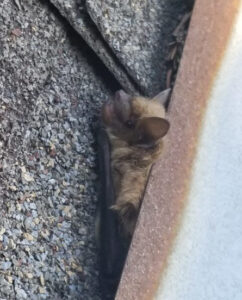 Do you have bats in your home or business? We often get calls for mice scratching on the walls or ceiling, but it almost always turns out to be bats. Bats tend to move every few weeks during hibernation to regulate their body temperatures. While crawling, bats will make a scratching sound in the walls or on the ceilings. Our experts will remove bats from your home or business.
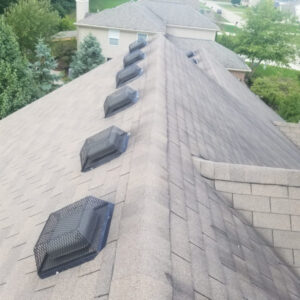
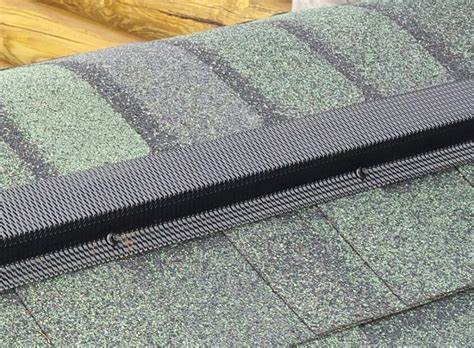
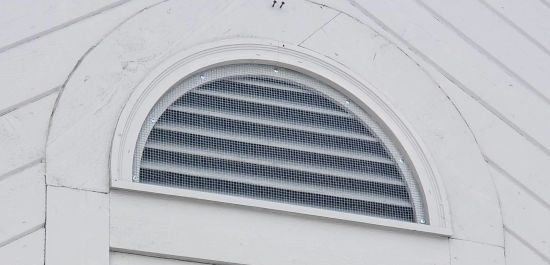
Bats tend to use openings 1/2″ or more prominent, so it is essential to seal everything in the home. We will inspect the ridge vents, gable vents, eves, chimneys, drip edge, fascia boards, under soffits, and any other gap that allows them access into the home or building.
Getting Rid of Bats
Bats are protected animals that can not be controlled like other pests. We use a custom one-way door that allows these flying pests to leave your home but not come back in. Then we seal up all the small gaps where they may reenter the building.
After waiting a few weeks and they all leave, we seal up the central openings to prevent them from coming back into the home or building. It may also be necessary to clean and disinfect areas where bats were roosting since there are many dangers, such as Rabies or Histoplasmosis, a life-threatening disease acquired by breathing fungal spores from bat droppings.
Bat Exclusions
We have completed many bat exclusions for less than the cost of other companies. If you have bats in your home or business, call now to schedule your free inspection when you purchase our quoted services (810)410-8563 or send us a message. We will gladly answer any questions you may have.
See our Wildlife Control Permit at the Department of Natural Resources
Bats in Your Home or Business
How We Keep Bats Out of Your Home or Business
Gary and the Bat – Our Vent Covers
 |
 |
 |
 |
What to Expect
Fall Bat Services:
Bats begin hibernation when temperatures stay below 50 degrees. This means that bats may stop exiting the building and hibernate through the winter until the following spring. Once bats go into hibernation, they will wake up individually about every two weeks to reposition themself to a more comfortable temperature range. Because this is done separately, you may hear bats daily, as there may be more than one bat. This is also the time many people see bats in their home as temperatures in the attic get colder, bats move further down into the walls, and sometimes find their way into the open basement. Once we put in the bat tubes, we may not remove them until the following season to avoid trapping bats inside the home.
Trapped Bats:
If bats are trapped and have nowhere to exit, they will find ways into the living space of a home or building. It’s essential to always have at least one exterior hole to allow bats to exit. This hole is where we put a bat valve. A bat valve is a one-way door that allows bats to exit but not reenter.
Young Bat Pups
Young bats cannot fly, and in large colonies, it is common practice to wait until they are old enough to fly before excluding them from a building. This is called the Blackout Period. Bats start to have pups in late May or early July, and it may take 3-6 weeks for the pups to be able to fly.
Bats inside the living space:
Bats will occasionally find themselves in a room of your home or building. This is by mistake, as there is nothing there that they want. Often, they exit the way they entered, which is almost always impossible to find. They can squeeze through minimal gaps that appear and disappear in a moment. This is why we do not waste time removing physical bats from a home. 99% of the time, by the time we get there, they are gone. Our goal is to get them out of your home and keep them out. Once that is complete, you won’t have the issue of them entering the living space again, but this is still possible during the eviction process. Just as bats may randomly find their way into the living area before we start exclusion services, they can do the same during the waiting period.
Waiting Period:
Bats have a high metabolism and must eat daily so that most bats will exit our bat valves within a few days. Bat valves are strategically placed on the main openings, allowing the best chance for bats to find the exit. These larger openings also have better air currents, which help guide the bats to the exit. We wait a few weeks before pulling the valves and sealing up those openings. Also see the Fall Bat Service information above regarding the hibernation period.
On rare occasions, bats may be unable to find their way out and typically perish within a few weeks. To mitigate this, we use multiple bat valves when necessary at no additional cost. Unfortunately, construction behind a wall is not always standard, and it can block internal areas that may prevent bats from exiting standard areas, such as soffits. In this case, we just need to wait for the bat to perish, as it may not be practical to rip open the building.
Prudential Pest Management services the following areas in Michigan:
Genesee County, Tuscola County, Lapeer County, Oakland County, Livingston County, Shiawassee County, Saginaw County, Burton, Clio, Davison, Fenton, Flint, Flushing, Grand Blanc, Linden, Montrose, Mount Morris, Swartz Creek, Gaines, Goodrich, Lennon, Montrose, Otisville, Otter Lake, Clayton Township, Fenton Township, Flint Township, Flushing Township, Genesee Township, Grand Blanc Township, Montrose Township, Mount Morris Township, Mundy Township, Vienna Township, Argentine Township, Atlas Township, Davison Township, Gaines Township, Richfield Township, Thetford Township, and Forest Township. We service all communities in Genesse and its surrounding counties.