Prudential Pest Management Small Fly Program

Imagine you’re a customer enjoying a meal with friends when a fruit fly suddenly appears in front of you. Flying around your food and beverages, waiting to contaminate the food you’ve been waiting so patiently for. While some may view this as a mere annoyance, it actually signals potential sanitation issues within your restaurant. Increasingly, diners and health inspectors alike recognize that the presence of fruit flies can indicate deeper concerns. What may have once been a minor inconvenience for a handful of customers can now significantly affect foot traffic to your establishment, especially given the influence of social media and online restaurant reviews. The repercussions of negative feedback can be considerable; studies show that a mere half-star increase on review sites like Yelp.com can lead restaurants to sell out 49% more often.
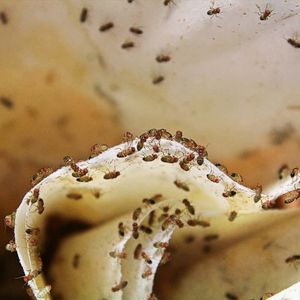 Fruit Flies in the Kitchen?
Prudential Pest Management provides fruit fly control services for restaurants and homes in Genesee County and surrounding areas. Schedule your Service (810)-410-8563
Commercial Small Fly Elimination
Small flies can inhabit your establishment throughout the year. You are not alone; 60% of food service operators report challenges with fruit flies or similar small insects. These flies typically thrive in hard-to-reach areas such as drains and beverage equipment. They can rapidly escalate into a significant infestation that may attract the scrutiny of health inspectors. Additionally, studies indicate that small flies can transmit various foodborne illnesses, posing a threat to food safety. Prudential Pest Management offers effective commercial fly control solutions to eliminate small flies from your facility. Our Small Fly Program provides comprehensive protection against infestations by targeting life stages at every stage for maximum effectiveness. Your commercial small fly elimination plan may include:
- Immediate adult small fly removal to provide quick relief and prevent future breeding
- Detailed inspections to pinpoint breeding, feeding, and resting locations
- Practical recommendations for structural changes and sanitation to eliminate potential breeding grounds
- Removal and/or treatment of breeding and feeding materials to disrupt the reproductive cycle
- Treatment of areas where adult flies rest
- Strategies to prevent re-infestations
When you collaborate with Prudential Pest Management, you can trust that you’ll receive innovative, science-driven solutions from thoroughly trained pest specialists, consistent service protocols, proactive insights to mitigate pest risks, and a strong dedication to partnership.
Because Fruit flies can reproduce within 7-10 days, it is essential to start the initial service on a weekly schedule for the first month, then move to every two weeks to maintain control. Controlling flies requires teamwork and utilizes control efforts from both the Pest Control Provider and the Building Staff. Although Prudential’s fruit fly program is successful, some situations are beyond the exterminator’s control, such as a location with broken sewage pipes. Phorid flies are small and resemble fruit flies, but they breed in sewage and can become problematic when underground pipes break. It is important to note that control for these can be limited until the pipes are repaired and the contaminated soil surrounding the damaged area is removed.
During the initial four weeks, we have a 3-step process:
Step 1. Inspect to identify small fly breeding sites and sanitation conditions.
Step 2. Develop a custom treatment plan that includes the areas the pest control technician will treat and the sanitation practices the restaurant staff needs to adjust.
Step 3. Implement the plan, treating all breeding sites and monitoring sanitation practices.
During the Maintenance period (every 2 weeks)
- We retreat breeding site areas and monitor sanitation conditions.
- Communicate with the customer on the progress.
DRAIN CLEANING AND BIO-SANITATION: Cleaning drains and reducing organic buildup are essential to any small fly management protocol. Physical removal is often necessary when pest infestations are severe. We treat floor gutters using a specified cleaning solution, particularly around the drain opening and drain plate, as these areas are critical for supporting small fly populations. After drains are cleaned (or in cases of light buildup), a bio-sanitation foam or similar product is applied to reduce organic material and help mitigate future buildup. These treatments also help loosen and remove years of grease and grime during the cleaning process. For small Flies, tiny fly larvae, and adults, are often found in and around drains. Foam serves as an effective delivery method for applying insecticides to the sidewalls of pipes where these insects are found. Using professional foaming equipment and the correct mixture of foaming agents with the cleaning solution, foam is applied deep into the drain, making the food material toxic to pests. A liquid solution may also be poured into drains or utilized as a mopping solution. The powder form can be applied to achieve the same objective. Another option involves a mixture of the cleaning agent and an insect growth regulator (IGR) that is available in a foaming aerosol.
Crack and Crevice Treatments: Similar to drain treatment, foam can be used to apply the cleaning mixture into cracks, crevices, and voids, filling areas where pests hide and leaving a residual effect on all surfaces. This process eradicates adults, while the cleaning agent helps manage the buildup of organic debris, including missing grout, cracked tiles on floors and walls, pipe penetrations, and voids. A liquid treatment may also be sprayed in these areas instead of foam. The powder form can also be applied in these locations.
If you need help getting rid of fruit flies, sewer flies, or gnats, call us at (810)410-8563
Check out our commercial and residential packages to save.
Small Flies, Major Issues
Small flies are prolific breeders that can quickly escalate from just a few insects to a significant fruit fly infestation in just a few days, annoying both customers and staff. Their connection to cleanliness problems and decaying food means that their presence in your establishment can adversely affect health inspection ratings and even lead to negative social media attention. Small flies can transfer bacteria to food and preparation surfaces, putting your customers at risk of foodborne illness. Red-Eyed Fruit Fly and the Dark-Eyed Fruit Fly can inhabit your establishment throughout the year. The Red-Eyed Fruit Fly is commonly found breeding in rotting fruits and vegetables. In contrast, the Dark-Eyed Fruit Fly tends to reproduce and feed on decaying organic matter, often found in wet, concealed, or hard-to-reach areas such as drains.
Furthermore, their presence can negatively affect health inspection ratings and may lead to the transfer of bacteria to food and surfaces used for food preparation. Because of the small fly’s Tarsus (Foot), the sticky feet of small flies can gather and transmit bacteria. The issue of small flies has escalated, necessitating prompt action upon their discovery in your facility.
SCIENCE-DRIVEN PEST CONTROL SOLUTIONS
Prudential Pest Management employs a well-established, proprietary strategy to combat small fly infestations by targeting various life stages for optimal effectiveness:
- Comprehensive inspections to locate breeding, feeding, and resting areas
- Actionable recommendations for structural changes and sanitation to eliminate these sites
- Removal and/or treatment of breeding and feeding materials to disrupt the reproductive cycle
- Immediate removal of adult small flies to provide quick relief and prevent future breeding
When you partner with Prudential Pest Management, you can trust in unparalleled pest expertise, reliable service delivery, actionable reporting, and valuable educational resources to help maintain a fly-free environment. Since the presence of both large and small flies often indicates sanitation or structural issues within your facility, the most effective way to prevent an infestation is to eliminate the breeding sources. An outside-in approach is a proven method for commercial fly control, and you can take additional measures to prevent infestations.
Did you know?
- Unlike many pests, small flies typically breed indoors, allowing them to survive in your facility year-round.
- A female small fly can lay as many as 100 eggs daily, which can develop into adult flies in just 10 to 20 days. If breeding sites are not addressed, populations can grow rapidly.
- While small flies often breed in hard-to-reach areas, they also frequent visible places such as salad bars, bread shelves, soda machines, and ice makers.
- Small flies groom themselves on smooth surfaces, including food prep areas, potentially transferring breeding and feeding materials that may contain bacteria.
- One of the primary contributors to fruit flies in restaurants is poor sanitation. These flies thrive in damp, decaying environments, such as rotting fruits and vegetables, drains, floor mats, and waste containers. They can even breed in hidden areas, such as beneath cracked floor tiles and in gaps left by missing grout. Once fruit flies find a suitable breeding site, they can quickly establish an infestation in your restaurant.
What Can You Do?
This is a long list, but in reality, most of these are one-and-done fixes, while the things that should be done during the nightly close are routine and straightforward for any restaurant. You must keep up with your employees and instill good sanitation practices; this is where most restaurants fail. If fruit flies persist despite thorough cleaning efforts, Prudential Pest Management can provide effective treatment and ongoing protection.
- Reduce Outdoor Breeding Opportunities:
- Ensure that garbage containers have tight-fitting lids and keep any spills to a minimum.
- Whenever possible, position garbage containers away from the facility.
- Remove any standing water near your establishment.
- Clear away weeds, tall grass, and excessive vegetation around the premises.
- Declutter and remove items from the ground near the facility.
- Install 20-mesh screens on any open windows
- Limit Small Fly Entry Points:
- Seal all doors and routinely inspect and repair entryways.
- In high-traffic situations, consider installing double-door vestibules, an air curtain, or plastic strip curtains.
- Minimize the duration that doors and windows remain open.
- Inspect incoming goods and refuse any items showing signs of small fly activity or spoilage.
- Diminish Indoor Breeding Opportunities:
- Eliminate standing water and accumulated moisture.
- Dispose of any infested fruits or vegetables and thoroughly clean the area to eliminate any food residues.
- Implement standardized cleaning protocols, including regular deep cleaning beneath equipment and counters.
- Eliminate food spillage
- Clean drains regularly to prevent debris from building up around openings.
- Seal any cracks and crevices in damp areas to reduce water entry.
- Address plumbing and drainage issues promptly.
- Clean rags and mop heads before storage.
- Clean floor mats
- Keep perishable items in sealed plastic containers.
- Whenever possible, refrigerate produce or store it in sealable plastic containers.
- Cover pour spouts/liquor
- Put away condiments
- Wipe everything down nightly
- Rinse out empty bottles and cans, take bottles/ cans out daily
- Wash trash bins
- Clean floor gutters
- Clean Drain catches
- Insect light traps
- Wash soda machine nozzles nightly
- Replace broken floor tiles and repair missing grout.
- Fill floor grout gaps( acid wash, then latex-based filler for long-term)
- Repair low areas in the floor that allow pooling
- Use a fan/blower to dry floors
- Remove screws from drain covers to enable quick and easy routine cleaning
- Control adults inside
- Install and “maintain” fly lights.
- Over time, ULV bulbs degrade and should be replaced regularly. A dirty glueboard on a light will reduce capture rates and should be replaced often as needed.
- Make sure the Fly Lights are at eye level and not competing with other natural light sources such as windows.
- Install and “maintain” fly lights.
- Train your team to:
- Clean and sanitize floors and areas around drains, disposals, and sinks daily:
- Thoroughly inspect and sweep beneath appliances, counters, and cooking lines.
- Use a stiff brush with an industrial floor cleaner to scrub floors, squeegeeing away debris and disposing of it in the trash rather than in drains.
- Mop the floor with an EPA-registered sanitizer approved for both food and non-food surfaces.
- Maintain drains:
- Clean drains and traps weekly using an industrial drain cleaner and a long-handled stiff brush.
- Use the “snake” tool in clogged drains to clear gelatinous materials.
- Dispose of any decaying organic matter.
- Perform periodic deep cleaning beneath plumbing and equipment lines.
- Clean rags and mop heads daily before storage.
-
Hire a Pest Service Provider to:
-
Utilize a science-based, risk assessment approach to monitor and manage fruit fly activity in and around your facility.
-
Conduct regular visual inspections of both the interior and exterior of the premises by trained professionals.
-
Document any sanitation and structural issues that could facilitate fruit fly activity, which may lead to their presence indoors.
-
When fruit flies are detected, identify primary and secondary breeding locations, as well as foraging sites.
-
Collaborate with management to make recommendations for improving conditions to reduce fly activity within the establishment.
-
Apply pesticides as necessary to targeted areas, ensuring minimal risk of exposure.
-
Apply Bio-Sanitation and Mineral products to breeding sites
-
Apply Insect Growth regulators to breeding sites
-
Install and Maintain Insect Light Traps (ILTs)
-
Install and maintain Fruit Fly traps
-
Can Fruit Flies Spread Pathogens?
Don’t be misled by their size; small flies can lead to serious challenges for businesses. These flies often signal underlying sanitation or structural problems. Fruit flies can transmit harmful pathogens such as E. coli and Salmonella, just as their larger counterparts do. This makes a fruit fly infestation a direct risk factor for various foodborne illnesses.
Fruit Flies and Food Safety
While fruit flies, a type of small fly, have traditionally been regarded as mere nuisances, recent studies indicate that they can contaminate food with bacteria picked up from unsanitary surfaces. This poses a significant risk to restaurants and food retail establishments that lack an effective fly control program. Small flies thrive and reproduce in decaying, bacteria-infested areas. They often land on food items and surfaces that come into contact with food, allowing them to transmit foodborne bacteria and contributing to various foodborne illnesses. As a result, restaurants face financial risks, as health departments may mandate closures due to fruit fly infestations.
What begins as a minor issue can rapidly escalate and disrupt operations. Small flies can lay as many as 100 eggs daily and can mature into reproductive adults in just seven days. Different species of small flies can indicate specific sanitation problems. The presence of fruit flies may indicate concerns such as rotting produce, unclean drains, or sanitation issues around beverage dispensers and other equipment. In contrast, a phorid fly infestation often points to garbage, dirty drains, stagnant water, or breaks in sub-slab sewer lines. Moth flies typically arise from sanitation deficiencies in drains, filters, and sewers. Small flies present in your facility represent a food safety concern linked to sanitation and structural issues that could result in audit or inspection failures, as well as poor customer experiences that negatively affect your business’s economic standing.”
Fruit flies have been closely linked to bacteria and other microorganisms found in the substrates where they live and feed. As a result, the presence of Dark-Eyed Fruit Flies in a foodservice environment poses a significant food safety concern, as these flies are believed to be capable of mechanically transferring pathogens from their breeding materials to surfaces they land on and groom. Research has confirmed that Dark-Eyed Fruit Flies can indeed transfer disease-causing organisms to food surfaces, underscoring the potential risks they pose.
Are you observing small black flies in the kitchen or dining area of your food service establishment?
Several common varieties of small black flies can affect food facilities, and treatment and elimination approaches may differ depending on the species.
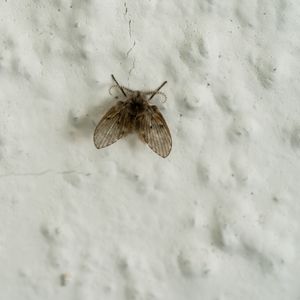
1. Adult Drain Moth Flies, also known as Sewer Flies or Filter Flies, range from 1/16″ to 1/4″ (1.6 to 6.4 mm) in length and are light gray to black with heart-shaped wings. They possess a delicate, fuzzy appearance and usually fly short distances before crawling on surfaces. These flies breed both indoors and outdoors on the gelatinous bacterial film found in drains, filters, sewers, lift stations, pits, and sump pumps.
2. Phorid Flies
Adults measure between 1/64″ and 1/4″ (0.4 to 6.4 mm) in length and can be black, brown, or yellowish. They have a humped back and display erratic movements, especially when running. Phorid flies breed in moist, decomposing organic matter both indoors and outdoors, often indicating potential plumbing or structural issues.
3. Fruit Flies (Vinegar Flies)
Two common types of fruit flies include:
- Red-eyed: Smaller, tan or light brown with distinctive red eyes.
- Dark-eyed: Larger, dark brown with dark eyes.
Biology and Behavior
The term “fruit fly” commonly refers to the small flies often found in kitchens and foodservice environments. The two most prevalent species are the Red-Eyed Fruit Fly, Drosophila melanogaster, and the Dark-Eyed Fruit Fly, Drosophila repleta. Additionally, establishments may encounter other types of fruit flies, such as Moth flies and Phorid flies, frequently referred to as “drain flies.” While there is some debate among taxonomists regarding the classification of these flies as ‘fruit flies,’ we will refer to them as such.
In recent years, the occurrence of fruit flies in foodservice facilities has increased due to a combination of factors, including reduced pesticide use and weakened sanitation practices. Both the Red-Eyed Fruit Fly and the Dark-Eyed Fruit Fly are present in these settings, but the Dark-Eyed variety is likely more abundant due to the availability of suitable breeding sites. Consequently, this review will primarily focus on the Dark-Eyed Fruit Fly.
Despite their small size, Dark-Eyed Fruit Flies can significantly impact foodservice operations. They can quickly become a nuisance for customers and harm a facility’s reputation or brand image. Moreover, fruit flies can adversely affect health inspection ratings and potentially transfer bacteria to food and food contact surfaces. A deeper understanding of the Dark-Eyed Fruit Fly will facilitate the development of more effective strategies to manage this pest and reduce the associated risks in foodservice environments.
The Dark-Eyed Fruit Fly is exceptionally adaptable, thriving year-round in foodservice facilities where they can live, feed, and breed. Their small size, relatively brief life cycle, and preferred food sources contribute to their persistence as a pest.
Fruit flies undergo complete metamorphosis, which includes four developmental stages: egg, larva, pupa, and adult. The time from egg to adult for the Dark-Eyed Fruit Fly is approximately three weeks, which is longer than that of the smaller Red-Eyed Fruit Fly. Adult Dark-Eyed Fruit Flies can live for over a month, making them relatively long-lived for their species. They can be identified by their slightly larger size and darker coloration compared to the Red-Eyed Fruit Fly.
Breeding Sites
Once an adult female Dark-Eyed Fruit Fly enters a foodservice facility, it is just a matter of time before she discovers optimal locations to lay her eggs. Equipped with specialized sensory capabilities, these flies are adept at locating suitable breeding sites. Once inside, they perform meandering flights to thoroughly explore every corner of the facility, seeking even the tiniest amounts of organic material suitable for breeding.
The ideal breeding sites for the Dark-Eyed Fruit Fly are typically moist, decaying organic matter that often forms biofilm. Contributing factors in biofilm formation include bacteria, yeast, and fungi. Familiar biofilm sources include “sugar snakes” in drain lines, slimy deposits in drains, and loose aggregates of organic material beneath and around equipment. Due to the constant presence of moisture, typical breeding locations include the interior and exterior of beverage service equipment, cracks and crevices in bar areas, underneath and between worn floor tiles, in beverage drain lines, and within and around floor drains. Additionally, decaying fruits and vegetables serve as breeding grounds. Structural issues that create sustained wet areas, such as beneath improperly sealed mop sinks, can also foster breeding conditions. Cleaning practices, such as nightly power washing, can inadvertently push water and food debris into wall voids and behind floor tile cove molding, further creating breeding sites.
Once a suitable breeding site is identified, female fruit flies will lay eggs and establish a population of larvae there. Depending on the availability of breeding material, these locations may attract additional flies, becoming a hub for reproduction and feeding. As long as breeding materials are present, sites will continue to draw in an increasing number of adult flies. The growth of fruit fly populations follows a logarithmic pattern, meaning that, if left unchecked, the number of fruit flies can escalate rapidly. What begins as a few flies one day can quickly turn into hundreds the next.
The most effective long-term strategy for maintaining a fruit fly-free environment is—and will always be—the implementation of excellent sanitation practices. Identifying and removing breeding sites, along with any organic material that could become breeding sites, will disrupt the fruit fly life cycle and prevent rapid reproduction.
Resting and Foraging Sites
Adult Dark-Eyed Fruit Flies exhibit specific daily behavioral patterns, with two peak activity periods occurring at dawn and dusk. These behaviors are influenced by internal timing mechanisms (circadian rhythms) and by external factors such as light and dark cycles. However, when flies inhabit indoor facilities, these activity patterns may become less pronounced due to altered lighting schedules and human interactions. Nonetheless, general activity trends for Dark-Eyed Fruit Flies can still be observed.
These flies tend to rest when the facility is quiet and the lighting is subdued. This resting behavior persists until light levels begin to rise. During the morning, the flies become highly active, focusing on locating and visiting breeding sites, feeding, and engaging in reproductive activities. In the evening, there is another surge of activity when many flies relocate from breeding sites to find quieter spots to rest. These resting sites can be located on walls, ceilings, cords, pipes, cardboard boxes, and other surfaces. While dark surfaces are preferred for resting, fruit flies will settle on any available surface.
Due to these daily behavior patterns, visual inspections for fly activity should be conducted at the same time each day to minimize the chances of false negatives. Adult flies are not always clustered near known breeding sites; during foraging, they can be found in areas with appealing odors where larval development opportunities do not exist. Common foraging locations include bars, waste receptacles, mop sinks, and other easily noticeable regions.
While recognizing resting and foraging sites is essential for managing fruit fly populations within a foodservice facility, the primary focus must be on identifying breeding sites and eliminating them through consistent, thorough sanitation practices.
Prudential Pest Management services the following areas in Michigan:
Genesee County, Tuscola County, Lapeer County, Oakland County, Livingston County, Shiawassee County, Saginaw County, Burton, Clio, Davison, Fenton, Flint, Flushing, Grand Blanc, Linden, Montrose, Mount Morris, Swartz Creek, Gaines, Goodrich, Lennon, Montrose, Otisville, Otter Lake, Clayton Township, Fenton Township, Flint Township, Flushing Township, Genesee Township, Grand Blanc Township, Montrose Township, Mount Morris Township, Mundy Township, Vienna Township, Argentine Township, Atlas Township, Davison Township, Gaines Township, Richfield Township, Thetford Township, and Forest Township. We service all communities in Genesse and its surrounding counties.